2026 Bathroom Wall Panel Trends: Colours, Patterns and Finishes to Watch
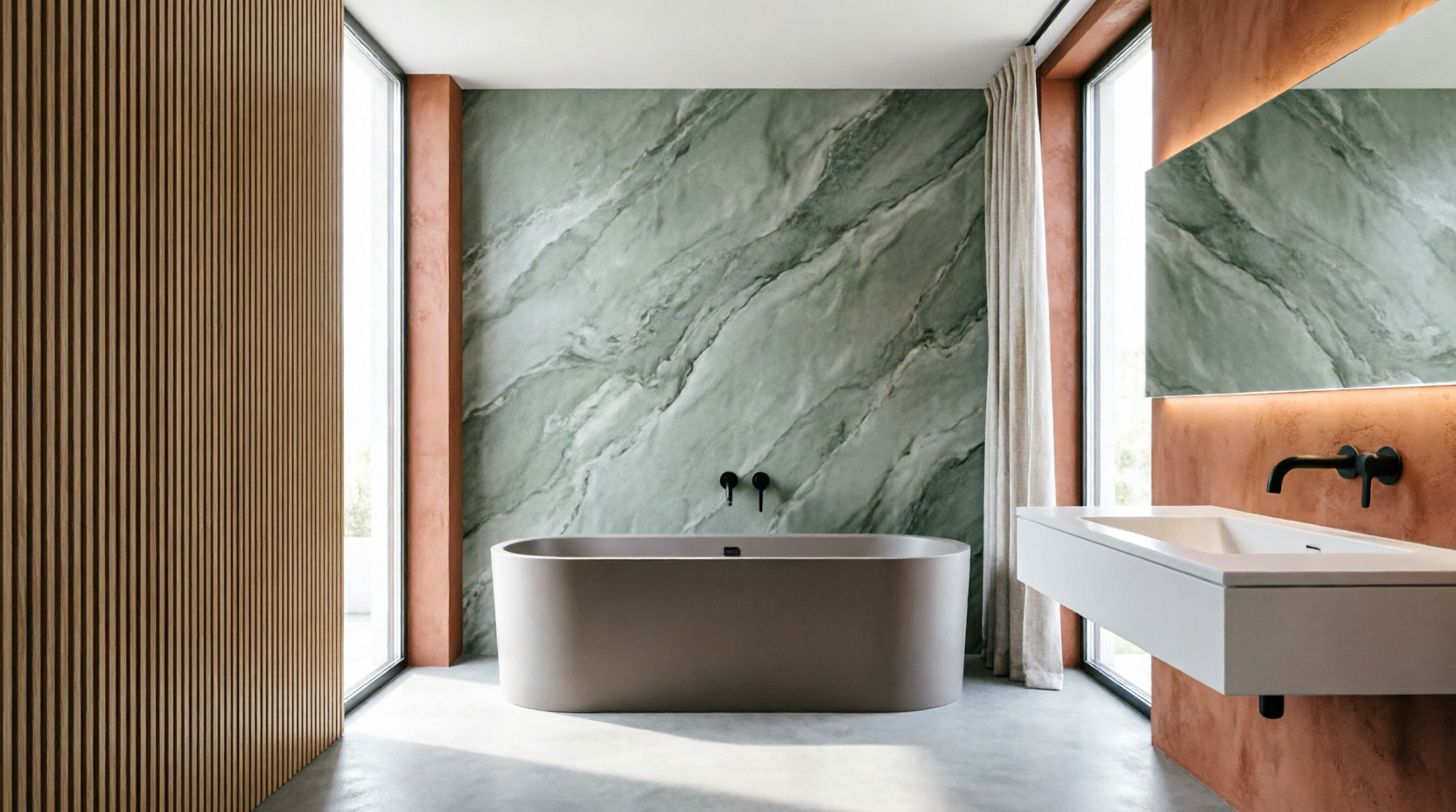
Choosing a wall panel for a bathroom is a longer commitment than choosing a paint colour. Installed, and hopefully left up, panels are expected to last, so knowing which trends will age well and which could see you regretting your choices is a welcome guide. This guide details the colours, patterns and finishes that are shaping bathroom design in 2026, giving useful pointers about their practical use to prevent future heartache.
Trends are about direction rather than certainty and no look fits all homes, so treat this a start a starting point for short-listing designs, and then experimenting with samples in your bathroom.
Colours: Softer, Earthier and Less Stark
White and grey have dominated UK bathrooms for a long time and the move away from this has been a slow burn. Warm, earthy shades are rising in popularity with soft clay, sand, putty, oatmeal and muted terracotta working well with brushed brass, black and chrome fittings, creating a calm scheme compared to a pure white design.
Greens are a another route, particularly sage, olive and deeper forest shades, which suit smaller bathrooms if there is sufficient lighting, and are a natural pairing with timber accents and plants. Blues have shifted to smoky, grey-leaning shades rather than bright aquas.
A practical note about darker colours, these tend to show limescale and water marks more readily, which has implications for hard water areas, but a darker shade with a satin or matt finish is much more forgiving than gloss. Lighter, warmer neutrals are the safer choice if you want a scheme that will aged gracefully.
Patterns: Natural Textures Without the Weight
Stone and marble effects remain a staple, but the styling has changed. Heavy, dramatic veining is still used for feature walls, but quieter designs with more spaced out veining suit larger areas, and terrazzo has re-emerged in subtler ways with smaller flecks in muted colours, rather than the bold chips in its previous incarnation. Timber effect designs are being used in natural, light and mid tone finishes, rather than very dark or heavily distressed looks. These provide warmth to a bathroom without the problems associated with real timber in a wet area, which is a draw if they are being used in a shower zone and bath surround.
Concrete and plaster effects provide a low-key, textured backdrop that suits modern and industrial schemes, and tile effect panels remain popular for their ability to mimic the look of tiles without grout lines to clean. Fluted and ribbed designs with vertical grooves to cast shadows are another pattern to consider, but they need a little more care when cleaning due to the dirt lying in the grooves.
A consideration when choosing a pattern is repetition, with a heavily marked design standing out when the same vein or flaw repeats on a panel either side of it. Look at how a design is printed and whether the manufacturer vary the patterns in a pack.
Finishes: Matt, Satin and Texture Over High Gloss
The surface finish is a big part of the current direction. High gloss still has its place, particularly around small rooms where the light will bounce, but matt and satin finishes are being chosen more due to their forgiving nature when it comes to finger prints, water spots and streaks. These lighter finishes also tend to pair better with stone and wood patterns.
Textured finishes provide a further dimension. Embossed grain, riven stone and fine linen-style textures offer panels a tactile quality that flat printing cannot, and can appear more realistic. They are also forgiving of minor marks, but a deeper texture can hold on to soap residue, so regular rinsing and wiping with a non-abrasive cleaner is recommended.
Metallic and brushed effects appear as accents to trims over large statements on walls. A brushed bronze or black trim around a pale panel provides a clean, defined edge that ties the wall into the taps and shower fittings.
Choosing Between Trends and Longevity
A bathroom is not a place to embrace every trend. One approach is to keep the largest surfaces calm and use bolder choices where they can be changed. A soft stone effect or warm neutral across the main walls leaves scope for a patterned feature panel or colour accents when the design refreshes.
Think of the room before the look:
- Small bathrooms tend to benefit from lighter colours and low contrast patterns to open up the space and a satin finish that reduces harsh reflections.
- Rooms with little natural light need warm shades to help boost it, but very dark shades can be heavy without sufficient artificial lighting.
- Family bathrooms need more forgiving finishes and mid tone colours to cope with regular use.
- For shower enclosures make sure that the panel is specified for use in wet areas and consider the jointing and trim as well as the design.
If you are comparing designs for an enclosure, browsing a range of shower wall panels will help you see how colours, patterns and finishes are being offered, which is more useful than relying on trend lists alone.
Pairing Panels With the Rest of the Room
Panels are best placed as part of a wider scheme, and fittings, flooring and lighting all have an impact on what a colour or pattern can achieve. A warm-toned panel can look underwhelming with cool white bulbs, and a cool grey panel could look stark with a grey floor. Consider the temperature of the lighting and the tone of other materials before deciding on a colour. Contrast is also worth planning and a heavily patterned wall typically needs plain surfaces around it, while a simple wall can cope with a bold floor or a statement mirror. If you want to help visualising complete schemes, the guide to the Best Shower Panels for Modern Bathrooms shows how different panel styles can fit into modern bathroom layouts.
What to Do Next
Pick two or three designs that suit the size and light in your bathroom, and order samples before choosing from a screen. Look them over in daylight and with your bathroom lights on, hold them against your fittings and splash them with water to see how marks appear. Check the manufacturers guidance on wet area use, installation and cleaning for the actual product. A design you are still liking after a weeks use of the sample is a better choice than one that only fits this years headlines.